

Quick answer
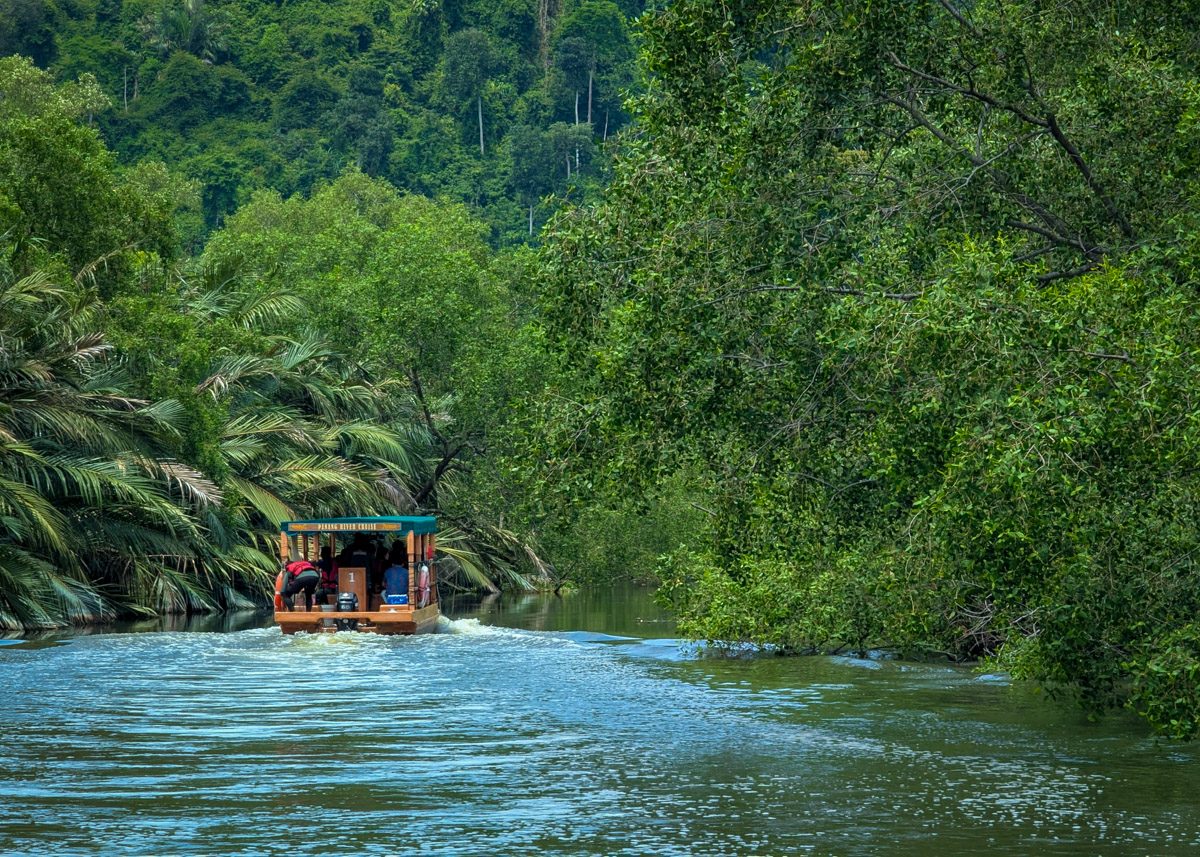
The penang river cruise wildlife culture experience runs daily from River Park Jetty, passing through protected mangrove corridors where monitor lizards, kingfishers, and mudskippers are commonly sighted. Evening departures coincide with firefly activity in the Pterocarpus trees along the eastern bank. The route also passes three traditional Malay kampung settlements where fishing platforms and stilt houses remain in active use, offering insight into riverine livelihoods that predate George Town's UNESCO designation.
The Perai River supports one of Penang's last intact mangrove ecosystems, a brackish-water forest that functions as both wildlife nursery and storm buffer. The cruise route threads through Avicennia and Rhizophora stands where water monitor lizards sun on exposed roots and collared kingfishers hunt from overhanging branches. Mudskippers—amphibious fish that breathe through their skin—gather on tidal flats during low water, while egrets and pond herons stalk the shallows. The mangrove canopy filters nutrient runoff and stabilizes sediment, creating conditions that sustain juvenile fish populations critical to the wider Strait of Malacca food web. Evening departures offer the penang river cruise wildlife culture's signature spectacle: synchronous firefly colonies that inhabit the Pterocarpus indicus trees lining the eastern bank. These bioluminescent beetles pulse in coordinated rhythms, visible from October through March when humidity and temperature align. The phenomenon depends on undisturbed darkness and specific riparian vegetation, both increasingly rare in urbanized Penang. The cruise operators maintain a no-spotlight policy during firefly season to preserve mating behavior, a practice adopted after consultation with entomologists from Universiti Sains Malaysia. The river corridor also traces a cultural transect through three kampung settlements whose architecture and economy remain tied to tidal cycles. Wooden fishing platforms extend from stilted houses, and rattan traps are set according to lunar phases that govern fish migration. Residents harvest cockles from the mudflats and dry anchovies on bamboo racks, techniques unchanged since the villages were established in the 1920s. The cruise does not disembark at these sites, but the proximity allows clear views of vernacular construction methods—attap-roofed dwellings elevated on belian posts—that contrast sharply with the high-rises visible upstream. The kampung landscape offers context for Penang's rapid transformation: these river communities occupy land increasingly surrounded by industrial zones and reclamation projects, making the waterway itself a refuge for both biodiversity and heritage practice. Seasonal timing shapes what you see. Migratory shorebirds—sandpipers, plovers, and whimbrels—pass through between August and November, using the mangroves as stopover habitat on the East Asian-Australasian Flyway. Monsoon rains from May to September raise water levels and reduce visibility, though they also trigger flowering cycles in the mangrove understory. The clearest wildlife viewing occurs during the dry months of December through March, when low water concentrates bird and fish activity in narrower channels. Firefly displays peak in January and February, when consecutive dry nights allow colonies to synchronize without weather interruption. The river ecosystem operates on interlocking schedules—tidal, lunar, seasonal—that the cruise route makes legible in a single transit.
“The mangrove canopy filters nutrient runoff and stabilizes sediment, creating conditions that sustain juvenile fish populations critical to the wider Strait of Malacca food web.”
Operating Hours for the Penang River Cruise Wildlife Culture Experience
The Penang River Cruise Wildlife Culture experience operates daily to accommodate your travel schedule. The attraction maintains consistent hours throughout the week.
| Monday | 10:30–18:00 | |
|---|---|---|
| Tuesday | 10:30–18:00 | |
| Wednesday | 10:30–18:00 | |
| Thursday | 10:30–18:00 | |
| Friday | 10:30–18:00 | |
| Saturday | 10:30–18:00 | |
| Sunday | 10:30–18:00 |
Getting to the Penang River Cruise Wildlife Culture Jetty
The Penang River Cruise departs from the River Park Jetty, located at 1938-B Jalan Perusahaan Auto City, Bandar Perai Jaya, 13600 Perai, Pulau Pinang. Visitors arriving from George Town or the mainland can reach this location most efficiently by car or taxi via the North-South Expressway.
Follow the North-South Expressway (E1) towards Auto City in Perai
Request a drop-off at River Park Jetty, Auto City
Take Rapid Penang bus lines to the Perai/Auto City area
Best Time to Experience Penang River Cruise Wildlife Culture
The optimal period for observing wildlife along the river corresponds with the recommended arrival window of 10:30–16:00. Arriving during these hours ensures sufficient time for the required check-in process while maximizing daylight for spotting riverbank activity.
Weekday mornings
Lower visitor density—
Quieter atmosphere provides better opportunities for spotting wildlife along the riverbanks.
Mid-day periods
Moderate visitor flow—
Consistent sunlight facilitates clearer viewing of the local ecosystem.
April and October
Seasonal transitionWarm and humid
These months often experience more stable weather patterns outside of peak monsoon surges.
Verdict: For the smoothest experience, prioritize arriving between 10:30 and 16:00 on weekdays, ensuring you check in at least 30 minutes before your scheduled departure.
Key Environmental Facts: Penang River Cruise Wildlife Culture
The Perai River ecosystem serves as a vital corridor for diverse flora and fauna, reflecting the intersection of industrial development and natural heritage in Penang. Observing this environment offers insight into the complex relationship between coastal waterways and local biodiversity.
Mangrove forest ecological significance
The riverbanks feature complex mangrove root systems that stabilize the coastline and provide essential nursery habitats for juvenile fish and crustaceans. These forests act as natural buffers against erosion in the tidal zones.
Egrets and birdlife observation
The cruise path passes through areas frequented by various wetland bird species, including egrets and herons that rely on the river for foraging. These populations serve as indicators of the waterway's overall ecological health.
Monitor lizard sightings
Large water monitor lizards are frequently observed along the muddy banks of the Perai River. These reptiles are well-adapted to the brackish water environment and often forage near the water's edge.
Coastal tidal river dynamics
The Perai River is a tidal waterway, meaning its water levels and salinity fluctuate significantly with the daily tide cycles. This constant shift dictates the behavioral patterns of the local aquatic life.
Industrial and natural landscape integration
The route highlights the coexistence of Penang's industrial infrastructure, such as the Perai manufacturing zone, alongside preserved riparian zones. This juxtaposition showcases the region's efforts to balance economic activity with environmental awareness.
Local fisherman traditional methods
Cultural history is reflected in the traditional fishing practices still visible along the river sections. Small-scale fishermen continue to utilize local waterways for sustenance, maintaining a centuries-old connection to the maritime environment.
Check availability
Frequently asked questions about penang river cruise wildlife culture
Everything you need to know about penang river cruise wildlife culture